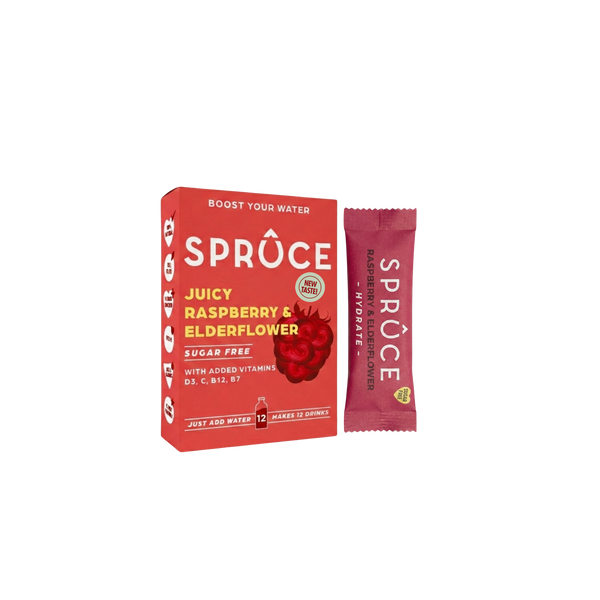
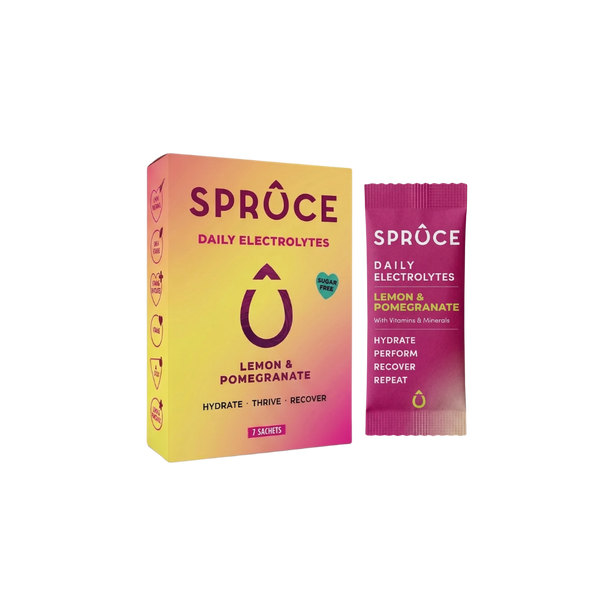
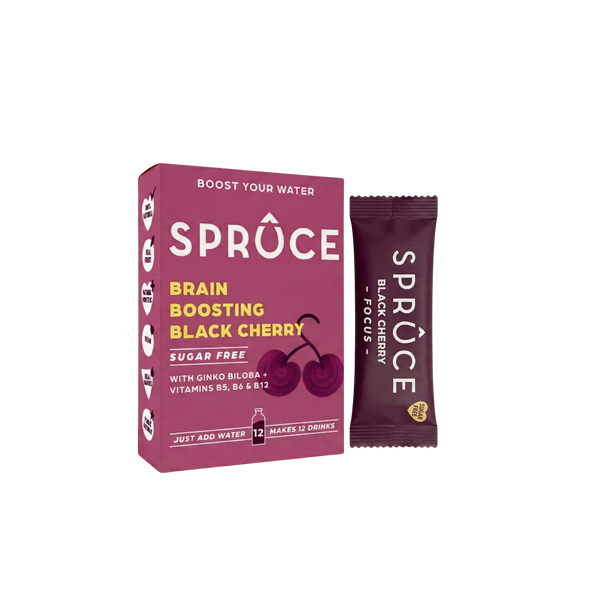
Every single Spruce sachet is sweetened with stevia. Which means we get asked about it. A lot.
The questions usually land somewhere between "is that the plant one?" and "isn't that the one with the weird aftertaste?" Yes, and sometimes. Let's get into it.
From leaf to glass
Stevia starts life as Stevia rebaudiana, a leafy green plant from South America, where people have used its leaves to sweeten drinks for generations.
- The plantA leafy green shrubStevia rebaudiana, native to South America.
- The leafNaturally sweetThe leaves contain steviol glycosides, the compounds that taste sweet.
- The sweet bitExtracted and purifiedThose compounds are drawn out and cleaned up into a sweetener.
- Your glassJust a pinchIt's so sweet that a tiny amount, balanced with real fruit, does the job.
On an ingredients list you'll see it as steviol glycosides, stevia or E960. On our packs it reads: Natural Sweetener (Stevia Glycosides as Stevia).
Is stevia safe?
Yes. Every sweetener in Great Britain goes through a safety assessment before it can be used in food and drink, and the NHS lists steviol glycosides (E960) among the approved ones. The European Food Safety Authority set an acceptable daily intake of 4mg per kg of body weight, the amount considered safe to have every day over a lifetime. The NHS says you don't need to count it: the limits on how much goes into food and drink already allow for normal eating habits.
Stevia vs sugar
Sugar brings sweetness with calories, about 4kcal a gram, and it counts towards your free sugars. The NHS suggests adults keep those under 30g a day, roughly seven sugar cubes, and sugary drinks are one of the easiest places to lose them.
Stevia brings the sweetness without the sugar. No free sugars, virtually no calories, and nothing for the bacteria on your teeth to feed on. The NHS points out that choosing sugar-free drinks can help reduce the risk of tooth decay.
What about the others? Sucralose, aspartame and acesulfame K are approved too, and you'll find them in plenty of squashes and water drops. We're not here to bash anyone's sweetener. We just know what we want in our glass: real fruit, a leaf-based sweetener, and nothing you can't pronounce.

The honest bit: the aftertaste
Stevia is very sweet, and in big doses some people pick up a slight liquorice or bitter note at the end. It's the number one reason people say "I tried a stevia drink once and never again."
The fix is balance. Just enough stevia, and real fruit doing the heavy lifting. Then get your water level right: too strong and you'll taste the sweetener, too weak and you'll taste the water. That's why we bang on about finding your sweet spot. Start at 500ml, then tune.


Sweetened by a leaf. Flavoured by real fruit. Zero sugar.
Stevia FAQs
Is stevia bad for you?
Stevia (steviol glycosides, E960) is an approved sweetener that has passed a safety assessment in Great Britain, with an acceptable daily intake set by EFSA. Enjoy it as part of a varied, balanced diet.
Is stevia better than sugar?
It has no sugar and virtually no calories, so swapping sugary drinks for stevia-sweetened ones is an easy way to cut down on free sugars. Adults are advised to have no more than 30g of free sugars a day.
Is stevia natural?
It comes from the leaves of the stevia plant, and the sweet compounds are extracted and purified. You'll often see it labelled as a natural sweetener, which is how it appears on Spruce packs.
Why does stevia sometimes taste bitter?
In larger amounts some people notice a slight bitter or liquorice note. Real fruit and the right amount of water balance it out.
Does Spruce use artificial sweeteners?
No. Every Spruce sachet is sweetened with stevia, with zero sugar.
General information, not medical advice.