You look a little thirsty. Don't take it personally. Most of us are, a bit, most of the time.
Not because we don't know water matters. We all know. It's just that plain water can feel like homework, and by 4pm the bottle on your desk is still mostly full. So let's skip the lecture and start with your number.
Work out your number
Three taps. No maths. No judgement.
Water calculator
How much should you drink today?
Based on EFSA’s 2 litres of water a day for women and 2.5 for men, with about a fifth usually coming from food. The extra for exercise and heat is a rough guide: sip to thirst and check your colour.
That's the water you need from drinks. Food covers the rest: around a fifth of your water comes from what you eat, which is why the official figures look a bit bigger.
The official numbers
The NHS says 6 to 8 glasses of fluid a day, roughly 1.5 to 2 litres. The European Food Safety Authority puts total water at 2 litres a day for women and 2.5 for men, counting food and drink together. Take off the fifth that comes from food and you land on about 1.6 litres from drinks for women and 2 litres for men.
Hot day? Sweaty workout? Feeling rough? You'll need more on top, to replace what you lose.

What a well-watered day looks like
Eight glasses sounds like a lot until you spread them out. Here's a day that gets there without trying too hard.
- 7amGlass oneA big glass of water before the coffee. Your first win of the day, done before you've opened your emails.
- 10amThe desk bottleA 500ml bottle is two glasses. Finish it before lunch and you're halfway there.
- 1pmWith lunchA glass with food, still or sparkling.
- 3pmThe slumpGlass five. The bit of the day where most of us forget. Make it one you look forward to.
- 6pmAfter the gym, the commute, the kidsTop up what you've sweated, stressed or shouted out.
- 9pmKettle offA last glass, then stop an hour or two before bed if it has you up in the night.

Your true colours
The simplest check is one you see every day. Pale straw-coloured pee means you're well hydrated. Darker means drink more. Feeling thirsty, a dry mouth or feeling light-headed are the other nudges. The NHS dehydration page has the full list.
What counts? More than you'd think
Water, lower-fat milk and lower-sugar drinks all count, and yes, that includes your tea and coffee. Food chips in too: fruit, veg, soup and yoghurt are full of water.
The one to watch is sugar. Plenty of "light" flavoured waters and squashes carry more than you'd expect, so check the label. Juice and smoothies count, but the NHS suggests a maximum of one small glass, 150ml, a day.
But what if you just don't like water?
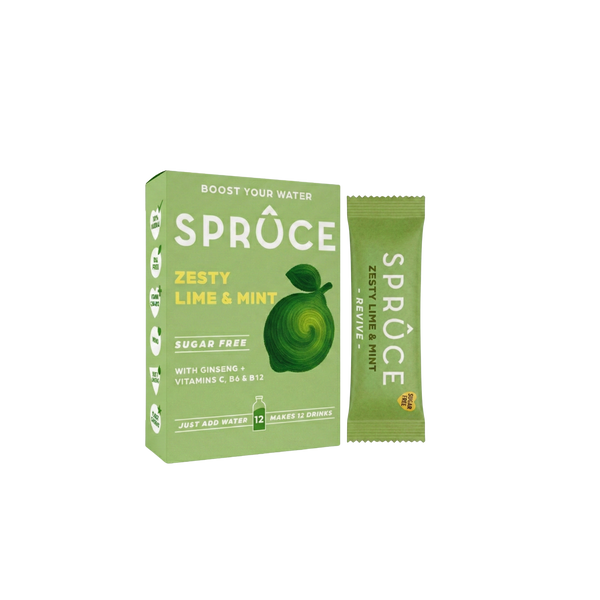
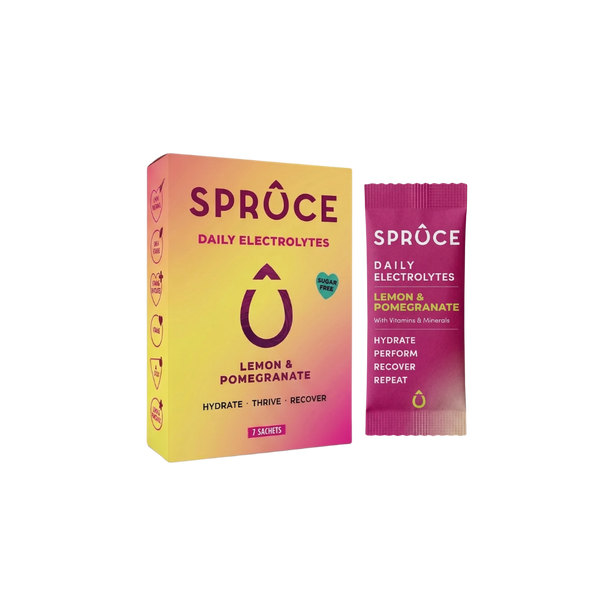
It's the thing we hear most. Water's boring. It's tasteless. It's a chore. Our founder Jonny was a self-confessed squash addict for years, which is exactly why Spruce exists.
Keep it ice cold, add something fresh, or try it fizzy. And if you want proper flavour without the sugar, tear, tip, top up.


Water first. Flavour that makes you come back for the next glass.
How much water should you drink a day? FAQs
How many litres of water should I drink a day?
Most adults need about 1.5 to 2 litres from drinks, which is 6 to 8 glasses. EFSA's total figures are 2 litres a day for women and 2.5 for men, but around a fifth of that comes from food.
How many glasses of water a day is that?
About 6 to 8 glasses of 250ml. On hot days, or when you're exercising, add a glass or two.
Does tea and coffee count as water?
Yes. The NHS counts tea and coffee towards your daily fluid. Go easy on the sugar.
How much water is too much?
It's rare, but drinking very large amounts in a short time can dilute the sodium in your blood, which is called hyponatraemia. Spread your drinks through the day and let thirst and the colour check guide you.
Is it good to drink water before bed?
A glass in the evening is fine for most people. If it has you up in the night, have your last big drink an hour or two before bed.
Does sparkling water count?
Yes. Sparkling water is still water, bubbles and all. If the fizz helps you drink more, go for it.
General information, not medical advice. If you have a medical condition that affects how much fluid you should have, follow your doctor's advice.